Bird of the Year – Partridge
VN:F [1.9.1_1087]
 The Grey Partridge (Perdix perdix) is a small bird of the pheasant family who mainly lives in farmland – in fields as well in pasturelands. It passes the winter in groups, often in the vicinity of human settlements.
(read more)
published April 14th, 2013
Tags: Birds,
Estonia,
Estonian Post,
New Issue,
new issues,
Other Nature,
Recommended Article,
Stamp Issue,
Stamps,
wildlife Posted in Country Stamps,
Stamp News
Memorial Day 2013 – The Silver Platter
VN:F [1.9.1_1087]

The letter card, cover and stamp – all of which are special and unique to Memorial Day – constitute the basis of a sensitive, original and extraordinary tradition that came into being following the War of Independence.
Since Memorial Day 1952, a long line of Presidents, Prime Ministers and Ministers of Defense have signed personal letters to bereaved families of the fallen and Israel’s premier artists take part in designing the covers and stamps for this commemorative day.
(read more)
published April 14th, 2013
Tags: Anniversaries,
Israel,
memorial day,
memory,
New Issue,
new issues,
Recommended Article,
silver platter,
Stamp Issue,
WOPA Posted in Country Stamps,
Stamp News
Australian Bush Babies
VN:F [1.9.1_1087]

This is the second in the Bush Babies stamp series produced in co-ordination with the Perth Mint’s release of bush baby coins. Bush Babies II features five more young Australian animals – platypus, echidna, brush-tailed possum, kookaburra and wombat. The stamps capture the whimsy and character of these young Australian animals.
(read more)
published April 13th, 2013
Buses III
VN:F [1.9.1_1087]

A bus (pron.: /ˈbʌs/; plural “buses”, /ˈbʌsɨz/, archaically also omnibus, multibus, or autobus) is a road vehicle designed to carry passengers. Buses can have a capacity as high as 300 passengers. The most common type of bus is the single-decker rigid bus, with larger loads carried by double-decker buses and articulated buses, and smaller loads carried by midibuses and minibuses; coaches are used for longer distance services.
(read more)
published April 13th, 2013
Tags: Buses,
Jersey,
New Issue,
new issues,
Recommended Article,
Stamp Issue,
Stamps,
Transport,
Transport Stamps,
WOPA Posted in Country Stamps,
Stamp News
AAT Mountains
VN:F [1.9.1_1087]

These stamps continue the Australian Antarctic Territory (AAT) Landscapes series which began with the iceberg issue in 2011. The mountains and mountain ranges featured reveal the beauty and grandeur of the landscape.
Antarctica is the highest continent on earth and Mt McClintock, in the eastern sector of the AAT is its highest mountain. Although elevations in excess of 4,000 metres exist in the western sector of the AAT, these are ice domes and generally not considered mountains, but the definition is frequently debated.
(read more)
published April 12th, 2013
The Three Legs of Man
VN:F [1.9.1_1087]

For upwards of a thousand years and probably more, the Three Legs of Man has been the symbol of Manxness yet the origin remains uncertain. In Ireland, stylistic spiral three legs were carved in stone in Neolithic times.
Throughout the world the mythology of threes has played a significant role, notably in India, China, Korea, ancient Greece and Rome – and among native North Americans. It should not be surprising therefore to note that the Manx Parliament consists of three divisions – the House of Keys, Legislative Council and Tynwald.
(read more)
published April 12th, 2013
Flavours of the Air and Fire
VN:F [1.9.1_1087]

Alentejo Our trip through the country now takes us to the Alentejo, where our view extends over the endless expanses of cork and holm oaks: the “montado” without which the Alentejo pig would not exist. Its rustic nature allows it to survive in extreme weather conditions, while in the mountain range its meat gains flavour from the Acorn. This is the raw material that is the basis of the undisputed quality of the blood sausages, bagged sausages and smoked hams of the Alentejo.
(read more)
published April 11th, 2013
Tags: flavours,
food,
food tradition,
New Issue,
Portugal,
portugal post,
Recommended Article,
sausages,
Stamp Issue,
Tradition,
WOPA Posted in Country Stamps,
Stamp News
Folk costumes – Karja
VN:F [1.9.1_1087]
 The stamps feature folk costumes from Kihelkonna in Western Saaremaa and from Karja in the North-eastern part of the island. The Karja stamp shows an elderly couple in long coats, dress worn around the middle of the 19th century as well as later, with red strings and coloured edges adding zing to the dark fabric. The man’s long coat is edged with a wide striped belt in many colours.
(read more)
published April 10th, 2013
Taking The Vultures Under Our Wing
VN:F [1.9.1_1087]

“Three things are beyond me;
four I cannot fathom:
How a Vulture makes its way over the sky…”
The Griffon Vulture, the Bearded Vulture, the Lappet-faced Vulture and the Egyptian Vulture are all scavengers which have been making their mark on the Israeli landscape since biblical times. The Vulture is mentioned 28 times in the Bible and it served as an ancient symbol of royalty both in Mesopotamia and in Egypt during the time of the Pharaohs. Anyone who has seen flocks of vultures soaring along the top of a cliff in the Golan Heights, the Judean Desert or the Negev Desert cannot help but be impressed by their strength and beauty. Maimonides was known as “The Great Vulture” and for good reason. These birds played an exceedingly important role as “nature’s orderlies” within the food chain, preventing the spread of disease and plague, thus ancient peoples treated them with great respect.
(read more)
published April 10th, 2013
Tags: Animals,
Birds,
Israel,
Nature,
New Issue,
new issues,
Other Nature,
Recommended Article,
Stamp Issue,
wildlife,
WOPA Posted in Country Stamps,
Stamp News
Most beautiful SEPAC stamp winner is Faroes
VN:F [1.9.1_1087]
The vote for the most beautiful 2011 SEPAC stamp has been decided. The Faroese stamp “Drangurin i Sundinum” won an overwhelming victory with 50.5 per cent of the votes,. The Åland Islands placed second with 11 per cent of the votes, while Iceland and Guernsey shared the third place with 8.2 per cent of the votes.
We congratulate the Faroe Islands on their victory. For more information about the winning stamp, please visit the website of Posta Stamps or WOPA Stamps 
Three lucky winners have been selected from all the voters:
1st prize, a year pack from all participating SEPAC countries, was won by
Vincent Soubeyran from Luxembourg.
2nd prize, seven year packs to be selected freely from the (read more)
published December 20th, 2012
Tristan da Cunha WWF Stamp Issue
VN:F [1.9.1_1087]
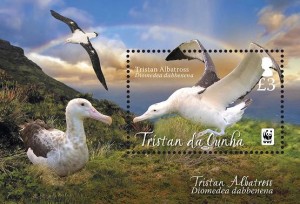
This stamp issue, produced in association with the World Wild Life Fund For Nature (WWF), depicts the Tristan Albatross (Diomedea dabbenena) which was only widely recognised as a full species in 1998. WWF is one of the world’s leading conservation organisations working towards conservation and sustainability.
There are three breeding species of Albatross within the Tristan Group. The Tristan Albatross is considered the most endangered. Originally thought to be a sub-species of the Wandering Albatross, it is practically indistinguishable from that bird at sea, but the Tristan Albatross is smaller and has a slightly darker back with a wing span of some 3 metres. It never attains the full white plumage of the Wandering Albatross and its bill is about 25mm shorter.
(read more)
published December 6th, 2012



 Loading...
