‘Our City in a Garden’ stamp issue by Singapore post!

Singapore’s Garden City Journey began in 1963, when then Prime Minister Lee Kuan Yew planted the first tree, signifying the start of the greening campaign.
published September 5th, 2013



Singapore’s Garden City Journey began in 1963, when then Prime Minister Lee Kuan Yew planted the first tree, signifying the start of the greening campaign.
published September 5th, 2013
 Loading...


This stamp issue is the fourth in the Australian Birds series. It focuses on pardalotes, a family (Pardalotidae) of foliage-gleaning, mainly insectivorous birds native to Australia and sometimes known as “peep-wrens” or “diamond birds”.
published June 4th, 2013
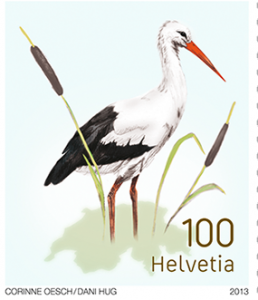
In 1949, Switzerland’s white stork population disappeared, leaving a landscape totally devoid of bill clattering.
published April 29th, 2013
 The Grey Partridge (Perdix perdix) is a small bird of the pheasant family who mainly lives in farmland – in fields as well in pasturelands. It passes the winter in groups, often in the vicinity of human settlements.
published April 14th, 2013

This is the second in the Bush Babies stamp series produced in co-ordination with the Perth Mint’s release of bush baby coins. Bush Babies II features five more young Australian animals – platypus, echidna, brush-tailed possum, kookaburra and wombat. The stamps capture the whimsy and character of these young Australian animals.
published April 13th, 2013

“Three things are beyond me; four I cannot fathom: How a Vulture makes its way over the sky…”
The Griffon Vulture, the Bearded Vulture, the Lappet-faced Vulture and the Egyptian Vulture are all scavengers which have been making their mark on the Israeli landscape since biblical times. The Vulture is mentioned 28 times in the Bible and it served as an ancient symbol of royalty both in Mesopotamia and in Egypt during the time of the Pharaohs. Anyone who has seen flocks of vultures soaring along the top of a cliff in the Golan Heights, the Judean Desert or the Negev Desert cannot help but be impressed by their strength and beauty. Maimonides was known as “The Great Vulture” and for good reason. These birds played an exceedingly important role as “nature’s orderlies” within the food chain, preventing the spread of disease and plague, thus ancient peoples treated them with great respect.
published April 10th, 2013
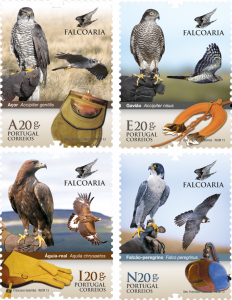 Falconry is the hunting of wild quarry in its natural state and habitat by means of a trained bird of prey. There are two traditional terms used to describe a person involved in falconry: a falconer flies a falcon; an austringer (German origin) flies a hawk (Accipiter and some buteos and similar) or an eagle (Aquila or similar).
published April 9th, 2013

Sue Daly is a wildlife film-maker, photographer and writer based in the tiny channel island of Sark.
Sue’s wonderful underwater images feature on our Marine Life issue which also includes a very special miniature sheet which, using the wizardry of Augmented Reality transports you under the ocean with Sue to watch just what goes on beneath the waves.
published February 24th, 2013

Many wildlife species have become extinct in recent generations and continue to do so, mainly due to man-made hazards.
published December 23rd, 2012
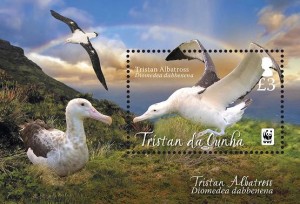
This stamp issue, produced in association with the World Wild Life Fund For Nature (WWF), depicts the Tristan Albatross (Diomedea dabbenena) which was only widely recognised as a full species in 1998. WWF is one of the world’s leading conservation organisations working towards conservation and sustainability.
There are three breeding species of Albatross within the Tristan Group. The Tristan Albatross is considered the most endangered. Originally thought to be a sub-species of the Wandering Albatross, it is practically indistinguishable from that bird at sea, but the Tristan Albatross is smaller and has a slightly darker back with a wing span of some 3 metres. It never attains the full white plumage of the Wandering Albatross and its bill is about 25mm shorter.
published December 6th, 2012
published November 27th, 2012