Denmark focuses on some of the species of fish that flourish in the seas around them!
VN:F [1.9.1_1087]

In this issue, post Denmark focuses on some of the species of fish that flourish in the seas around Denmark. The four stamps are produced in offset and designed by Bertil skov Jørgensen, with graphics by post Danmark stamps.
(read more)
published January 13th, 2013
Tags: Denmark,
Fish,
marine life,
Nature,
New Issue,
Recommended Issue,
Science,
Sea life,
Species,
Stamp Issue,
WOPA Posted in Country Stamps,
Stamp News
Forests and Nature by Jersey Post!
VN:F [1.9.1_1087]

A forest, also referred to as a wood or the woods, is an area with a high density of trees.
(read more)
published January 12th, 2013
Topical Philippine Folklores and Legends Series: Bernardo Carpio Stamps
VN:F [1.9.1_1087]

Bernardo Carpio is a legendary figure in Philippine Mythology who is said to be the cause of earthquakes.
(read more)
published January 6th, 2013
Tags: Culture,
Folklore,
Legends,
Myths,
Natural Disasters,
Nature,
New Issue,
Philippine Post,
Philippines,
Stamp Issue,
Stories,
Tradition Posted in Country Stamps,
Stamp News
The common Buzzard – Birds of 2012 by Hungary!
VN:F [1.9.1_1087]

Birds of prey are this year’s new features. Állami Nyomda printed 80,000 copies of the block depicting the common buzzard, the 2012 bird of the year, based on the design by graphic artist Kálmán Székely.
(read more)
published January 5th, 2013
Wildlife Conservation by Israel!
VN:F [1.9.1_1087]

Many wildlife species have become extinct in recent generations and continue to do so, mainly due to man-made hazards.
(read more)
published December 23rd, 2012
Israel’s Energy Resources!
VN:F [1.9.1_1087]

Energy resources discovered in recent years will provide Israel with a safe and stable future of energy independence.
(read more)
published December 14th, 2012
Old & Historic Trees of Korea stamp series!
VN:F [1.9.1_1087]

The “Old and Historic Trees of Korea Series,” has introduced Korea’s historic trees to date. This year’s series will mark the last installment of the old and historic trees that are widely deemed “trees that protect the nation.” These revered trees which impart a glimpse of our ancestors’ love for their country will be introduced through stamps.
(read more)
published December 7th, 2012
Rivers of Korea Series!
VN:F [1.9.1_1087]

The last installment of the “Rivers of Korea Series” features the Han River following the Nakdong River, Seomjin River and Geum River.
(read more)
published November 30th, 2012
Fascinating new stamps that feature Baby Raccoons!
VN:F [1.9.1_1087]
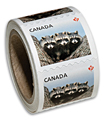
The hinterland comes to life in the fascinating new stamps of this series,
(read more)
published November 27th, 2012
Fascinating tourists destinations chosen for you on stamps by Korean Post!
VN:F [1.9.1_1087]

The second installment of Fascinating Tourist Destinations in Korea introduces Gungnamji Pond in Buyeo, the Sheep Ranch in Daegwallyeong, Cheonjiyeon Waterfall in Jeju Island and Dinosaur Ridge on Mt. Seoraksan. Gungnamji Pond in Buyeo The welcoming wooden bridge unfolds widely over the pond. When the bridge is crossed, a cozy pavilion awaits.
(read more)
published November 23rd, 2012
Tags: Attactions,
Culture,
Destinations,
History,
Korean Post,
landscapes,
Mountain Scape,
Nature,
South Korea,
Stamp Issue,
Tourist,
Tradition Posted in Country Stamps,
Stamp News
Gibraltar’s second edition to the Endangered Animals stamp series
VN:F [1.9.1_1087]

The Arabian Oryx (Oryx leucoryx) is a medium-sized antelope with a distinct shoulder hump, long, straight horns, and a tufted tail. It is a bovid, the smallest member of Oryx genus, native to desert and steppe areas of the Arabian Peninsula. The Arabian oryx was extinct in the wild by the early 1970s, but was saved in zoos and private preserves and reintroduced into the wild starting in 1980. In 1986, the Arabian oryx was classified as endangered on the IUCN Red List, and in 2011, it was the first animal to receive Vulnerable status again after having been listed as extinct in the wild. It is listed in CITES Appendix I. As of 2011, populations were estimated at over 1000 individuals in the wild, and 6000 – 7000 individuals in captivity worldwide.
(read more)
published November 14th, 2012



 Loading...
