
Aland Post celebrates its ‘Popular Music Festivals’
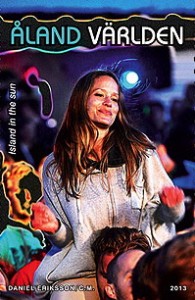
A great many music events are arranged in Åland during the summer months. The Post focuses on two of them in 2013 with the issue of two action-packed and lyrical stamps.
published August 2nd, 2013



A great many music events are arranged in Åland during the summer months. The Post focuses on two of them in 2013 with the issue of two action-packed and lyrical stamps.
published August 2nd, 2013
 Loading...


Rock festivals have been an integral part of Danish popular culture fro decades. Every year, Danes and foreigners alike flock to the many outdoor festivals to sea and hear both world-famous and less well-known bands.
published July 26th, 2013

The number of town festivals held in Iceland in the summer has been increasing in recent years.
published May 4th, 2013

H.S.H. Princess Stéphanie loves the circus. She is the organizer and president of Monte-Carlo’s International Circus Festival, the biggest in the world.
published January 14th, 2013

Magyar Posta traditionally greets this greatest festival for stamp collectors by issuing stamps. In addition to the souvenir sheet with extra charge, a dual denomination stamp series and a special version of it will come out. Magyar Posta will devote the surcharge sum (200 Forints per sheet) to supporting organised stamp collecting activity in Hungary.
published September 17th, 2012

In his book ‘A Century Of British Chess’, Philip Sergeant writes that Britain’s first chess club, Parsloe’s, which opened in 1774, numbered among its early supporters George Eliot, later General Eliot, Governor of Gibraltar and commander of the forces during the Great Siege of 1779-1783. Many famous military men have played chess. Down the ages Gibraltarians, together with other local residents and Gibraltar garrison personnel, have included chess amongst their leisure activities.
published July 31st, 2012

The onset of a new year brings with it the hope of rectifying past problems and the anticipation of fulfilling achievements and wishes. These feelings are expressed through New Year’s greetings and by performing actions symbolizing renewal and hope for a better future. The Rosh Hashanah feast includes various types of food that serve as symbols of the holiday.
The inclusion of foods with symbolic meaning in the Rosh Hashanah feast is an ancient tradition, the roots of which may be found in the writings of the Sages. The Babylonian Talmud (Tractate Kritot, page 6a) says, “Abaye said, ‘at the beginning of every year a person should accustom himself to eat gourds, fenugreek, leeks, beets and dates’”. The Hebrew names of these foods are symbolic as they serve as the basis for the blessings customarily recited prior to eating them: gourd (krah) – “May it be Your will, Lord our God and God of our forefathers that our bad decrees should be torn up” (yikrah); fenugreek (rubya) – “May it be Your will… that our merits should be numerous” (yirbu); leek (karti) – “our enemies should be cut off” (yikratu); beets (silka) – “our enemies should be removed” (yistalku); dates (tamarim) – “our enemies should be finished” (yitamu).
published July 28th, 2011